

Ion Exchange & Water Softeners
Ion exchange is the leading process for eliminating hardness ions—primarily calcium and magnesium—from water. Whether you’re a homeowner or a plant engineer, this method scales efficiently across residential and industrial environments. These systems protect pipes, reduce appliance wear, and cut cleaning costs.
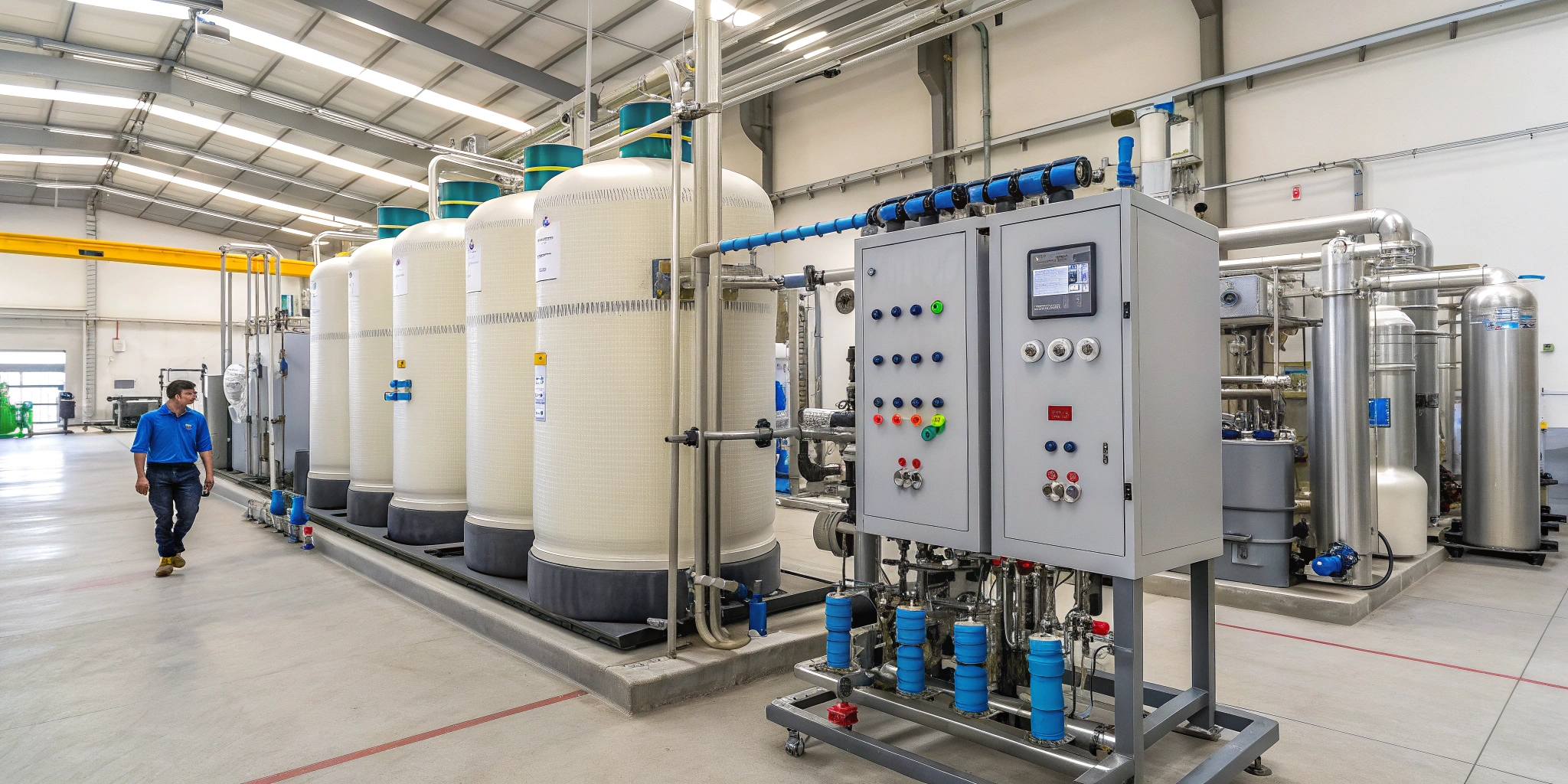
How Ion Exchange Softening Works
Core Process
When hard water flows into a softener tank, resin beads charged with sodium (Na⁺) or hydrogen (H⁺) ions attract and trap hardness minerals through cation exchange.
Ca²⁺ and Mg²⁺ ions in the water swap places with sodium ions on the resin.
The process is driven by ionic charge affinity.
Regeneration Cycle
When beads are saturated, a brine (saltwater) solution is flushed through the tank, displacing the trapped calcium and magnesium.
- Key Reaction: 2RNa + Ca²⁺ → R₂Ca + 2Na⁺ (R = resin polymer)
Types of Ion Exchange Water Softeners
| Type | Ideal Use Case | Hardness Capacity |
|---|---|---|
| Single-Tank | Small homes & apartments | 20,000–30,000 grains |
| Twin-Tank | 24/7 operation | 40,000–80,000 grains |
| Industrial Vessels | Municipal & factory-level use | 500,000+ grains |
The Ion Exchange Water Softening Process: Step-by-Step
1
Service Cycle – Hard water enters the resin tank → Ca²⁺/Mg²⁺ ions bind to the resin → Softened water exits.
2
Backwash – Flow is reversed to dislodge and flush out debris.
2
3
Brine Draw – Salt solution displaces calcium and magnesium ions on the resin.
4
Rinse – Clean water flushes remaining brine, prepping the system for the next cycle.
4
Why Ion Exchange Dominates Water Softening Methods
Advantages
Removes 99%+ of hardness ions
Operates at line pressure (no pumps required)
Cost-efficient: $0.02–$0.10 per 1,000 gallons
Extends lifespan of water heaters, pipes, and appliances
Limitations
Adds sodium (5–30 mg/L)—alternatives exist for low-sodium needs
Not effective for removing TDS or organic pollutants
Industrial Ion Exchange Water Treatment
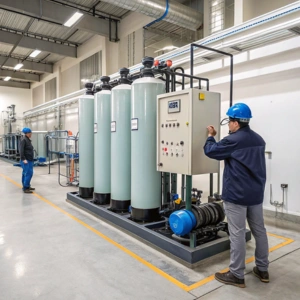
Power Plants
Prevents turbine damage due to mineral scale
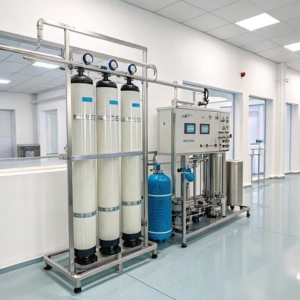
Pharmaceuticals
Enables production of deionized, sterile water
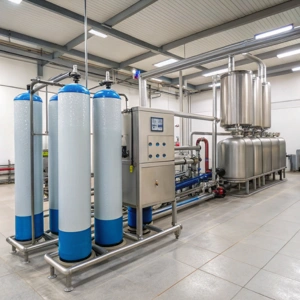
Food & Beverage
Maintains flavor purity in processing lines
Advanced Resin Applications
Chelating resins for lead, arsenic
Nitrate-selective resins for agriculture-related contamination
5 Signs You Need an Ion Exchange Water Softener
Persistent white scale on fixtures and kettles
Soap refuses to lather properly
Laundry feels rough or scratchy
Rising utility bills from mineral-clogged heating elements
Skin irritation or dryness after showering
Maintenance Best Practices for Longevity
Refill salt tank every 4–8 weeks with high-purity pellets
Replace resin beads every 10–15 years
Sanitize annually to prevent bacteria or iron fouling
Ion Exchange vs. Other Water Softening Methods
| Method | Hardness Removal | Operating Cost | Maintenance |
|---|---|---|---|
| Ion Exchange | 99%+ | Low | Moderate |
| Template-Assisted Crystallization (TAC) | Prevents scaling | Medium | Low |
| Reverse Osmosis | 95%+ | High | Complex |
Frequently Asked Questions
Can ion exchange systems soften water without using sodium?
Yes, ion exchange water softeners can operate without sodium by using hydrogen-based resins. These systems exchange calcium and magnesium ions for hydrogen ions instead of sodium, making them ideal for people on low-sodium diets or in areas with sodium discharge restrictions. This process still removes hardness effectively and is often used in ultra-pure water applications like pharmaceuticals and electronics manufacturing.
How much salt does an ion exchange softener use during regeneration?
Most ion exchange systems use 5 to 15 pounds of salt per regeneration cycle, depending on the water hardness level, softener capacity, and brine tank settings. High-efficiency models and metered systems optimize salt use by regenerating only when necessary, reducing operational costs.
Can ion exchange remove heavy metals like lead or arsenic from water?
Standard ion exchange softeners do not remove heavy metals, but specialized ion exchange resins can. Chelating resins are designed to capture lead, mercury, cadmium, and arsenic, making them effective for homes near industrial zones or old infrastructure.
Is the ion exchange water softening process safe for drinking water?
Yes, the ion exchange process is safe and approved by NSF/ANSI 44 standards for drinking water treatment. However, if sodium-based softeners are used, the final water may contain 5–30 mg/L of added sodium. This is well within safety limits, but individuals on sodium-restricted diets should consider hydrogen-based alternatives or use reverse osmosis as a post-treatment step.
What is the lifespan of an ion exchange water softener?
With regular maintenance, ion exchange water softeners last 10–15 years or more. Resin beads may need replacement after a decade, especially in areas with high iron or manganese. Brine tanks, control valves, and seals should be inspected annually to ensure peak performance.