Sand Filters
Whether you manage a home, farm, factory, or RO plant, water clarity matters.
- Manufactured in Ambattur, Chennai
- Sized to your site and water
- Installation and service support

Why Choose Our Sand Filter?
Multi layer quartz media captures particles down to 40 µm in a single pass.
Low friction under drain plates cut back wash water use.
FRP or mild steel epoxy lined shells rated for 6 bar working pressure.
Product & Application

Residential sand filters
Protect RO systems and washing machines from grit. A typical 10 × 54 in (25 L) unit treats 2 m³ h, slashing cartridge filter changes and extending RO membrane life by 40 %.

Sand filters for agriculture & irrigation
Layered sand and gravel beds block suspended solids that clog drippers. Models up to 20 m³ h keep subsurface drip lines flowing, even with open well or canal feeds.

Ro pre filters for commercial plants
Every litre that reaches an RO membrane first passes through our rapid sand vessels, lowering SDI from >5 to ≤1.5 and lifting permeate output while cutting membrane cleaning chemical cost.

High pressure industrial sand filters
Pharmaceutical, food processing, and textile clients rely on 1 000 mm dia. filters that handle 15 m³ h at 5 bar, removing fine fibres and colloids before EDI or softener trains.
How a Sand Filter Works
Influent water enters above the media, distributing evenly across the bed.
Solids are trapped as water percolates through successive layers of coarse gravel, fine silica, and garnet.
Filtered water is collected by a hub and laterals under drain, then sent to storage or downstream treatment.
Choose with confidence
Choosing the right filtration systems
- Identify the problem: turbidity, iron, smell, colour or chlorine.
- Match the filter size to flow rate (m³/hour) rather than tank size.
- Plan backwash water and a drain point near the filter.
- Use filtration ahead of RO or softeners to protect them.
- Agree a media replacement schedule at installation.
Shop
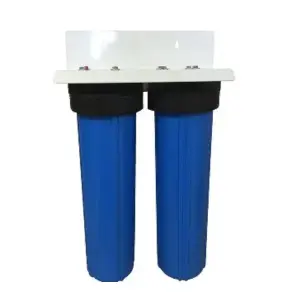
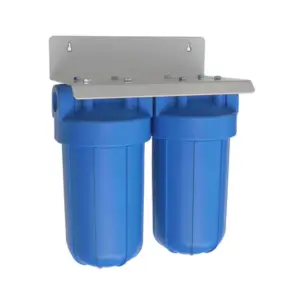
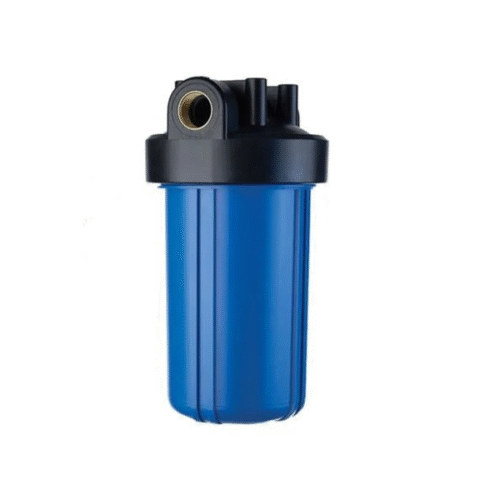
Filtration Systems you can order online
Prices and stock shown in the shop. For bulk orders or help choosing, ask us.

How we work
From first message to running system
- 01
Tell us the need
Share your requirement, site details and any water report or photos.
- 02
We review and size
We ask the right questions and size the system for your site.
- 03
Clear quotation
You get a quote with scope, specification and timelines.
- 04
Build, install, support
We manufacture, install, commission and stay available for service.
Related solutions
More in Filtration Systems
How often should I back wash?
When the pressure drop rises by 0.7 kg cm ² or at least once every 7 days for surface water sources.
What is the media life?
Silica sand typically lasts 3–5 years with proper back wash; replace when it rounds or cakes.
Can the same filter handle RO feed pressures?
Yes—our industrial series is hydro tested to 10 bar and operates safely at 6 bar.
Which contaminants are removed?
Mud, rust, silt, micro flocs, algae, and any particle larger than about 40 µm.
How do I know it’s clogged?
Monitor the inlet/outlet pressure gauge pair—an increasing differential means it’s time to back wash.
What is a sand media filter and how does it work?
A sand media filter is a water filtration system that removes suspended solids, turbidity, and particles using layers of natural media like silica sand, anthracite, and garnet. Water flows downward through the media bed, where larger debris is caught in the upper layers and finer particles are trapped deeper, producing clean, clear water. Most systems feature an automatic backwash cycle for easy cleaning and long-term operation.
What type of media is best for a sand filter?
The best media depends on your application. Standard #20 silica sand is great for general use. Anthracite works well for oily or organic contaminants in high-flow systems. Garnet is ideal for polishing and fine particle removal. For specialized needs like iron and manganese removal, consider Greensand™.
How often should you replace sand in a media filter?
On average, silica sand should be replaced every 3 to 5 years to maintain filtration performance. Anthracite may last 5 to 7 years, and garnet typically needs replacement only if pressure loss or poor water quality is observed. Always monitor flow rate and backwash efficiency to determine media life.
What’s the difference between multimedia and single-media sand filters?
Multimedia filters use 3 to 5 layers of media—typically anthracite, sand, and garnet—to improve filtration efficiency. They offer higher flow rates, longer run times, and better clarity compared to single-media sand filters, which only use one type of media. MMFs are especially useful for pre-RO and variable-load systems.
Are sand filters better than cartridge filters?
Yes—for high-volume or continuous-use systems, sand media filters are more cost-effective and sustainable. They hold more solids, require fewer replacements, and can be backwashed instead of manually changed. Cartridge filters are better for small, low-flow setups but have higher maintenance and operational costs.
Start a conversation
Tell us what you need
Share a few details about Sand Filters and your site. We reply on working days with questions or a quote.
Talk to a person
Speak with the Greenly team
No call centre. Your message reaches the people who design and build the system.
- +91 95000 55565
- WhatsApp +91 95000 55565
- greenly@greenly.co.in
- 101, 102 & 103 Tass Industrial Estate, SIDCO Industrial Estate, Ambattur, Chennai 600058
Visits by appointment - Open 10:00 am – 5:30 pm