Sand Filter for Borewell Water
Borewell water often contains clay, mud, silt, and suspended solids, which cause turbidity, clog pipes, and damage expensive RO membranes.
- Manufactured in Ambattur, Chennai
- Sized to your site and water
- Installation and service support
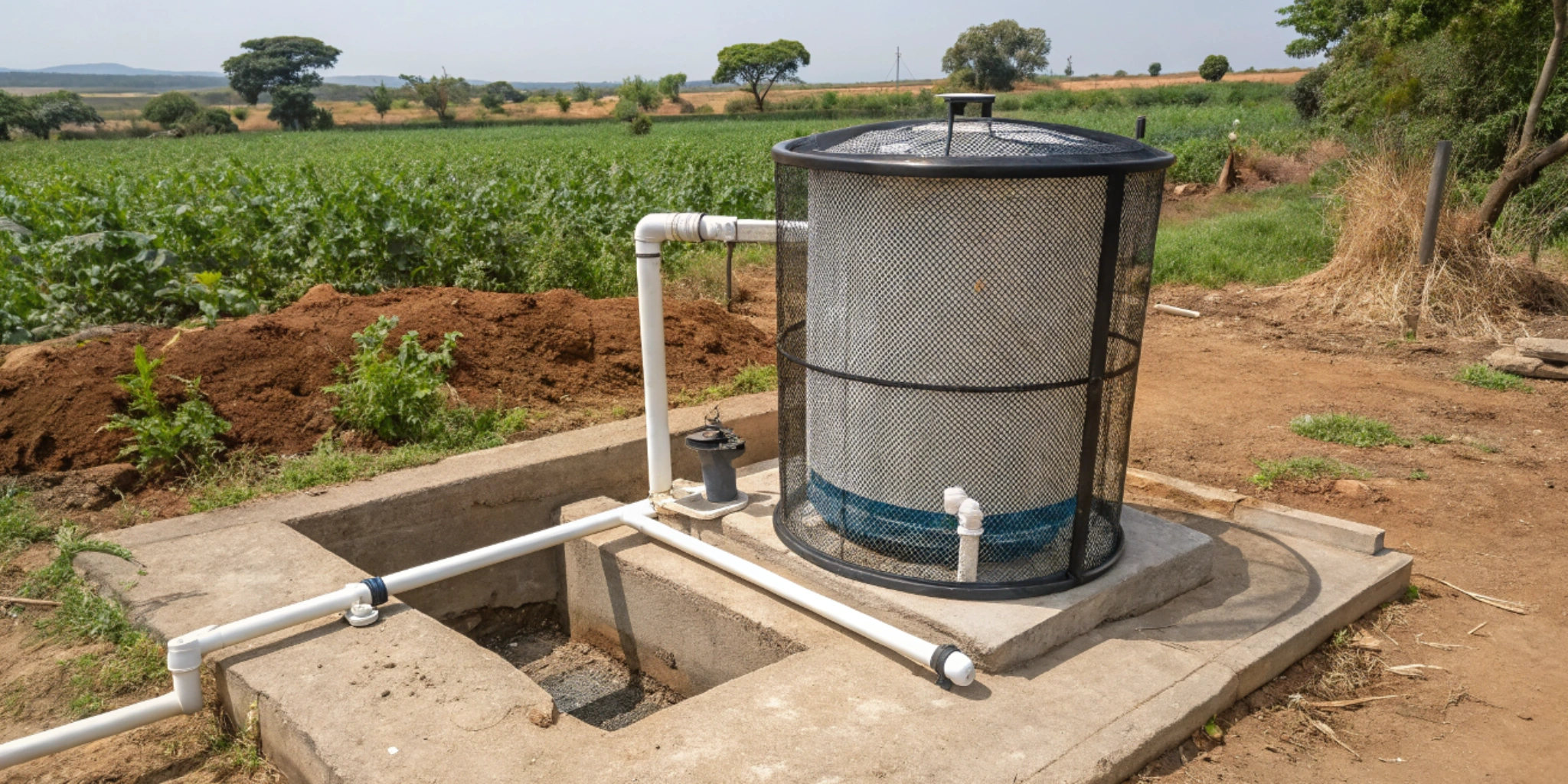
What Is a Sand Filter for Borewell Water?
Unlike basic filters that only target specific impurities, Industrial RO Systems ensure comprehensive purification by removing dissolved salts, bacteria, and heavy metals, making them the most reliable solution for industries requiring high-quality water.
Multi-Layer Filtration
Water passes through layers of sand and gravel, which trap clay, silt, and other suspended solids.
Gravity or Pressure Filtration
Operates under pressure for high-flow applications like apartments and industries.
Backwashing Process
Essential for Borewell Water: Especially if TDS > 300 ppm or water shows visible sediment.
How Does a Sand Filter Work?
Key Benefits of Sand Filters
Removes Turbidity & Dirt
Clears cloudy water caused by clay and suspended solids.
Handles High Sediment Load
Perfect for borewell water with heavy contamination.
Low Maintenance
Requires only backwashing every few weeks.
Long Life
Sand media lasts 12–18 months with proper care.
Suitable for Large Volumes
Ideal for apartments, villas, and industrial plants.
Protects RO Membrane & Appliances
Reduces clogging, extends system life, and cuts maintenance costs.
Applications of Sand Filters
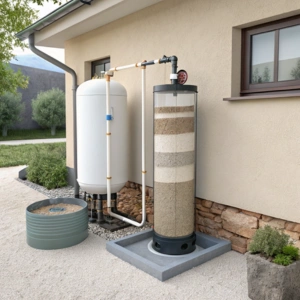
Domestic Homes
Prevents clogging of RO filters and plumbing systems.
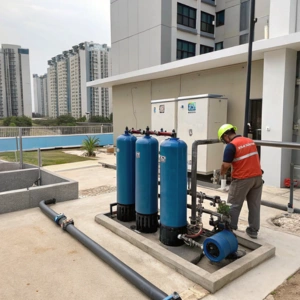
Apartment Complexes
Used in centralized water treatment plants.
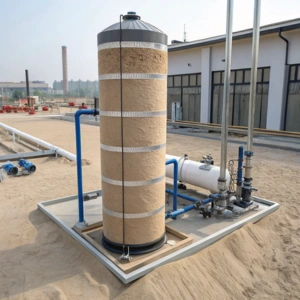
Industries
Pre-treatment for cooling towers, boilers, and process water systems.
Types of Sand Filters for Borewell Water
Pressure Sand Filters (PSF)
Enclosed systems designed for high-pressure, high-flow filtration. Best for apartments and industries.
Gravity Sand Filters
Simple, open systems commonly used in rural and low-pressure setups.
Sand Filter vs Cartridge Filter – Which One to Choose?
| Feature | Sand Filter | Cartridge Filter |
|---|---|---|
| Best For | Heavy sediment load | Low sediment levels |
| Maintenance | Backwashing every 15–30 days | Cartridge change every 6 months |
| Flow Rate | High (ideal for large setups) | Low (ideal for small homes) |
Installation Tips for Sand Filters
1
2
Install at the first stage of water treatment (before RO or softener).
Ensure inlet pressure of 2.5–3 kg/cm² for efficient operation.
Provide a drain line for backwashing.
Use a multiport valve for easy backwash and rinse cycles.
3
4
4
Maintenance Guide
Backwash every 15–30 days (or as soon as you notice pressure drop).
Replace sand media every 12–18 months.
Clean inlet strainers and valves periodically to maintain performance.
Choose with confidence
Choosing the right filtration systems
- Identify the problem: turbidity, iron, smell, colour or chlorine.
- Match the filter size to flow rate (m³/hour) rather than tank size.
- Plan backwash water and a drain point near the filter.
- Use filtration ahead of RO or softeners to protect them.
- Agree a media replacement schedule at installation.
Shop
Filtration Systems you can order online
Prices and stock shown in the shop. For bulk orders or help choosing, ask us.

How we work
From first message to running system
- 01
Tell us the need
Share your requirement, site details and any water report or photos.
- 02
We review and size
We ask the right questions and size the system for your site.
- 03
Clear quotation
You get a quote with scope, specification and timelines.
- 04
Build, install, support
We manufacture, install, commission and stay available for service.
Related solutions
More in Filtration Systems
Questions, answered
FAQs about Sand Filter for Borewell Water
Still unsure? Ask us directly or call +91 95000 55565.
Why do I need a sand filter for borewell water?
Borewell water often contains mud, silt, and suspended solids. A sand filter removes these particles, preventing clogging and extending the life of your RO system.
Can a sand filter make water drinkable?
No. A sand filter only removes dirt and turbidity. For safe drinking water, use RO + UV treatment after the sand filter.
How often should I backwash my sand filter?
Every 15–30 days, depending on sediment load in your borewell water.
Does a sand filter reduce TDS or hardness?
No. It only removes suspended particles. Use RO for TDS reduction and a softener for hardness.
Which is better for borewell water – sand filter or cartridge filter?
Sand filters are better for high sediment loads and larger setups. Cartridge filters work for homes with low sediment.
How long does the sand media last?
12–18 months with proper backwashing.
Where should I install a sand filter?
At the first stage of water treatment, before RO and softener systems.
Which filter do I need for borewell water?
Most borewell water needs a sand or multi-grade filter for suspended solids, and an iron removal filter if iron is present. A water test tells us which stages are needed.
What does an activated carbon filter remove?
Carbon filters reduce chlorine, odour, colour and many organic compounds. They are often used after a sand filter and before RO or softening.
How often should filter media be replaced?
Sand media lasts longer than carbon. Replacement depends on water quality and backwash practice; we share a schedule when the filter is installed.
Start a conversation
Tell us what you need
Share a few details about Sand Filter for Borewell Water and your site. We reply on working days with questions or a quote.
Talk to a person
Speak with the Greenly team
No call centre. Your message reaches the people who design and build the system.
- +91 95000 55565
- WhatsApp +91 95000 55565
- greenly@greenly.co.in
- 101, 102 & 103 Tass Industrial Estate, SIDCO Industrial Estate, Ambattur, Chennai 600058
Visits by appointment - Open 10:00 am – 5:30 pm