Iron Removal Filter
Our modular plants strip out of iron (Fe) and manganese (Mn), protecting health, equipment and product quality.
- Manufactured in Ambattur, Chennai
- Sized to your site and water
- Installation and service support

Why Remove Iron & Manganese?
Health & Taste
Even 0.3 mg/L of iron or 0.05 mg/L of manganese makes water taste metallic, discolouring tea, coffee and baby formula. Higher levels can aggravate hemochromatosis and other iron-storage disorders.
Aesthetic Damage
Oxidised iron forms reddish-brown rust that stains sinks, laundry and bathroom fittings while manganese leaves black deposits.
Industrial & Infrastructure Costs
Iron flakes foul RO membranes, block spray nozzles, corrode pipelines and force unscheduled shutdowns—driving up maintenance budgets by 20-40 % in food-processing plants alone.
How Greenly Filters Work
Oxidation
Air, ozone or chlorine converts invisible ferrous ions to ferric particles.
Catalytic Media Bed
Birm®, Greensand-Plus™ or MnO₂-coated sand traps the rust while speeding up further oxidation.
Automatic Back-wash
When smart sensors detect a preset pressure drop, the system back-washes, dislodging captured particles without manual intervention.
Key Features & Benefits
Heavy-duty FRP or epoxy-lined MS vessels rated 4 kg/cm² working pressure
1–100 m³/h flow-range modules; duplex skids for uninterrupted supply
Plug-and-play PLC control panel with remote SCADA option
No consumable chemicals in most applications → lower OPEX
5-year media life; quick-change under-drain strainers reduce downtime
Typical Model Line-Up
| Model ID | Max Flow | Inlet Iron | Bed Volume | Footprint |
|---|---|---|---|---|
| IRF-05 | 5 m³/h | ≤10 ppm | 120 L | 0.6 × 1.4 m |
| IRF-20 | 20 m³/h | ≤15 ppm | 450 L | 1.0 × 2.2 m |
| IRF-50 | 50 m³/h | ≤30 ppm | 1 250 L | 1.8 × 3.4 m |
Environmental & Cost Advantages
Sensor-triggered back-wash cuts rinse-water use
Gravity-drain option delivers zero-energy back-wash on elevated sites
Non-hazardous rinse water; spent media landfill-safe after 5-7 years
Choose with confidence
Choosing the right filtration systems
- Identify the problem: turbidity, iron, smell, colour or chlorine.
- Match the filter size to flow rate (m³/hour) rather than tank size.
- Plan backwash water and a drain point near the filter.
- Use filtration ahead of RO or softeners to protect them.
- Agree a media replacement schedule at installation.
Shop
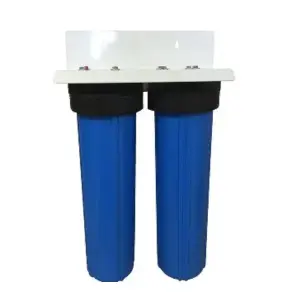
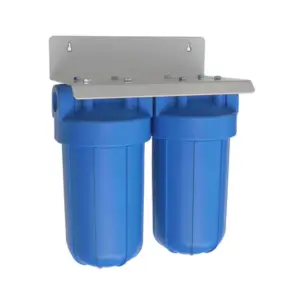
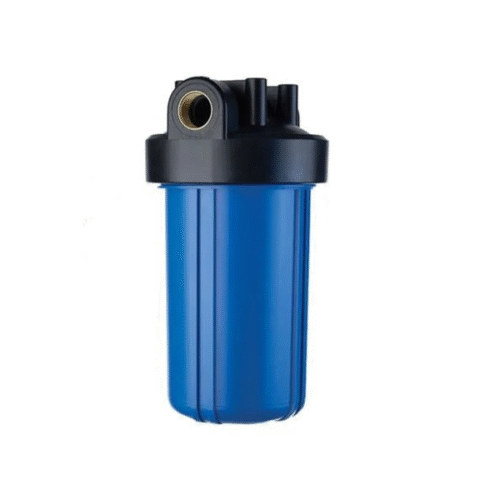
Filtration Systems you can order online
Prices and stock shown in the shop. For bulk orders or help choosing, ask us.

How we work
From first message to running system
- 01
Tell us the need
Share your requirement, site details and any water report or photos.
- 02
We review and size
We ask the right questions and size the system for your site.
- 03
Clear quotation
You get a quote with scope, specification and timelines.
- 04
Build, install, support
We manufacture, install, commission and stay available for service.
Related solutions
More in Filtration Systems
Questions, answered
FAQs about Iron Removal Filter
Still unsure? Ask us directly or call +91 95000 55565.
How much iron can a Greenly filter remove?
Standard units treat up to 15 ppm Fe. Custom duplex skids, paired with pre-oxidation, handle >30 ppm while still delivering outlet iron <0.3 mg/L.
How often does the system back-wash?
Typically every 48–72 hours, but our differential-pressure sensors trigger back-wash only when needed—saving up to 50 000 L rinse water per month on a 20 m³/h plant.
Does it also remove manganese?
Yes.
What maintenance is required?
Replace media every 5–7 years, inspect valves quarterly and service the air/ozone injectors annually. Our AMC plans cover all routine tasks.
Can it integrate with my existing RO or softener system?
Absolutely. Installing the iron filter upstream prevents fouling, lowers chemical dosage and can extend RO membrane life by 30 %. Our engineers size connections for seamless retro-fit.
Which filter do I need for borewell water?
Most borewell water needs a sand or multi-grade filter for suspended solids, and an iron removal filter if iron is present. A water test tells us which stages are needed.
What does an activated carbon filter remove?
Carbon filters reduce chlorine, odour, colour and many organic compounds. They are often used after a sand filter and before RO or softening.
How often should filter media be replaced?
Sand media lasts longer than carbon. Replacement depends on water quality and backwash practice; we share a schedule when the filter is installed.
What is backwashing?
Backwashing reverses the flow through the filter to lift and flush out trapped dirt. Regular backwashing keeps pressure drop low and media working.
Can you build filters for agriculture and industry?
Yes. We build sand filters for drip irrigation, industrial process water and RO pre-treatment in sizes to suit the flow.
Start a conversation
Tell us what you need
Share a few details about Iron Removal Filter and your site. We reply on working days with questions or a quote.
Talk to a person
Speak with the Greenly team
No call centre. Your message reaches the people who design and build the system.
- +91 95000 55565
- WhatsApp +91 95000 55565
- greenly@greenly.co.in
- 101, 102 & 103 Tass Industrial Estate, SIDCO Industrial Estate, Ambattur, Chennai 600058
Visits by appointment - Open 10:00 am – 5:30 pm