Sand & Multi-Media Filters
In industrial filtration, generic solutions often fall short. we specialize in designing custom-engineered cartridge filter housing systems that meet your unique operational needs.
- Manufactured in Ambattur, Chennai
- Sized to your site and water
- Installation and service support

What Are Sand Filters & Multi-Media Filters?
Sand filters use layers of high-purity silica to remove sediment, rust, and visible turbidity from water. Multi-media filters, also called layered or dual-media filters, go a step further by incorporating anthracite, garnet, and fine sand. This structure enables better depth filtration, capturing particles as small as 10–15 microns. These systems are ideal for industrial operations, municipal treatment plants, and agricultural irrigation.
Material
Uniform silica sand (0.45–0.55 mm).
Bed Depth
24–30 inches for maximum sediment holding.
Flow Rates
5–20 GPM/ft²; adjustable to match your system.
Micron Rating
Standard sand filters remove 20–50 microns.
How Filter Media Specs Impact Performance
Sand vs. Multi-Media Filters: Which Is for Your Application?
Budget-friendly
Effective for light sediment loads
Ideal for pools, farms, and prefiltration
Removes smaller particles (5–15 microns)
Suited for wastewater, RO pre-treatment, and heavy silt
Higher dirt-holding capacity and longer runtime between cleans
Combines anthracite and sand for a balance of performance and cost
Sand Filters
Multi-Media Filters
Dual-Media Filters
Benefits of Our Engineered Filtration Systems
1
2
Extended Lifespan
Layered media means less frequent backwashing.
Stable Flow
Maintains pressure even under high volume.
Reduced Maintenance
Automated cleaning cycles save time.
Eco-Conscious
Reusable media reduces environmental footprint.
Versatile Use
Handles iron, turbidity, organic matter, and more.
3
4
4
5
Application

Municipal Treatment
Ensures clarity before disinfection.

Industrial Facilities
Recirculating water for boilers or coolants.

Irrigation Systems
Prevents clogging in agriculture.

Commercial Buildings
Protects HVAC systems and equipment.

Wastewater Plants
Final polishing stage before discharge.
Comparison Table: Sand vs. Multi-Media Filters
| Feature | Sand Filter | Multi-Media Filter |
|---|---|---|
| Particle Size | 20–50 microns | 5–15 microns |
| Media Composition | Single layer (sand) | 2–3 layers (anthracite, sand, garnet) |
| Cost | More affordable | Higher initial investment |
| Best For | Low sediment loads | High turbidity, organic material |
Choosing the Right System: Key Considerations
Water Quality Goals
Need high clarity? Go multi-media.
Budget
Sand is economical, but may require more frequent maintenance.
Flow Demands
Higher GPM? Layered filters handle it better.
Choose with confidence
Choosing the right filtration systems
- Identify the problem: turbidity, iron, smell, colour or chlorine.
- Match the filter size to flow rate (m³/hour) rather than tank size.
- Plan backwash water and a drain point near the filter.
- Use filtration ahead of RO or softeners to protect them.
- Agree a media replacement schedule at installation.
Shop
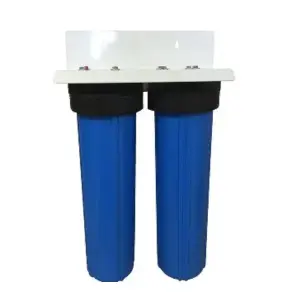
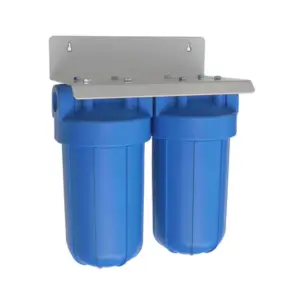
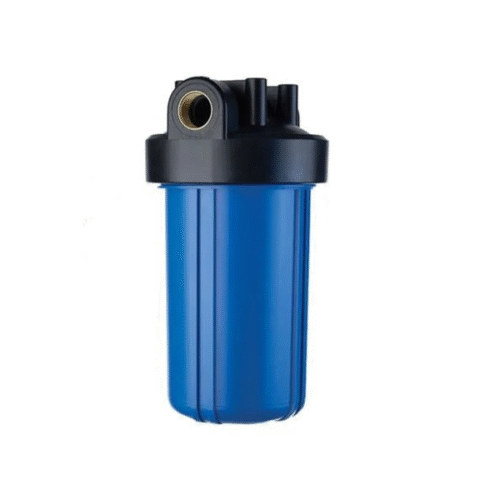
Filtration Systems you can order online
Prices and stock shown in the shop. For bulk orders or help choosing, ask us.

How we work
From first message to running system
- 01
Tell us the need
Share your requirement, site details and any water report or photos.
- 02
We review and size
We ask the right questions and size the system for your site.
- 03
Clear quotation
You get a quote with scope, specification and timelines.
- 04
Build, install, support
We manufacture, install, commission and stay available for service.
Related solutions
More in Filtration Systems
Questions, answered
FAQs about Sand & Multi-Media Filters
Still unsure? Ask us directly or call +91 95000 55565.
What’s the difference between a sand filter and a multi-media filter?
Sand filters use a single layer of silica sand to remove larger particles (typically 20–50 microns), while multi-media filters use two or more media layers (like anthracite, sand, and garnet) to filter out smaller particles (5–15 microns). Multi-media filters offer better depth filtration and longer runtime before backwashing.
Which filter is better for high turbidity water?
Multi-media filters are more effective for high turbidity or dirty water because of their layered design, which captures a broader range of particle sizes and organic material. They're ideal for pre-treatment before RO systems, wastewater polishing, and surface water treatment.
How often should sand or multi-media filters be backwashed?
Typically, backwashing should be done weekly or whenever the pressure drop exceeds 10 psi. Automated backwash systems can simplify maintenance and ensure consistent performance.
What is the lifespan of filter media?
• Silica sand: Replace every 3–5 years depending on water quality and usage
• Anthracite or garnet: Replace every 5–7 years
Regular inspection helps extend media life and system efficiency.
Can I use these filters in residential water systems?
While they are primarily used in commercial, industrial, and municipal setups, smaller versions of these filters can be installed in residential systems, especially for homes using well water or with high sediment levels.
Do sand and multi-media filters remove iron or manganese?
Yes—when properly configured and combined with pre-oxidation (like chlorine or air), these filters can effectively reduce iron, manganese, and even hydrogen sulfide, especially in groundwater systems.
What is the difference between a sand filter and a multi grade filter?
A sand filter uses only one type of media, usually fine sand, whereas a multi grade water filter uses several graded layers—gravel, coarse sand, fine sand, and anthracite. This multi-layer design ensures deeper filtration and higher dirt-holding capacity.
What are the main types of Multi Grade Water Filters?
There are four major types:
• Fixed bed multi grade filter (FRP/MS/SS vessel)
• Automatic multi grade filter with auto backwash
• Manual multi grade filter with hand valves
• Custom-capacity models for home, commercial, and industrial applications
Which is better: automatic or manual multi grade filter?
An automatic multi grade filter is ideal for continuous industrial use—it backwashes automatically with timers or PLCs.
A manual multi grade filter suits small-scale setups where backwashing can be done manually to save cost.
How often should a Multi Grade Water Filter be backwashed?
Backwashing frequency depends on feed water quality and turbidity levels. Typically, every 2–3 days is recommended to maintain optimal flow and filtration performance.
Start a conversation
Tell us what you need
Share a few details about Sand & Multi-Media Filters and your site. We reply on working days with questions or a quote.
Talk to a person
Speak with the Greenly team
No call centre. Your message reaches the people who design and build the system.
- +91 95000 55565
- WhatsApp +91 95000 55565
- greenly@greenly.co.in
- 101, 102 & 103 Tass Industrial Estate, SIDCO Industrial Estate, Ambattur, Chennai 600058
Visits by appointment - Open 10:00 am – 5:30 pm