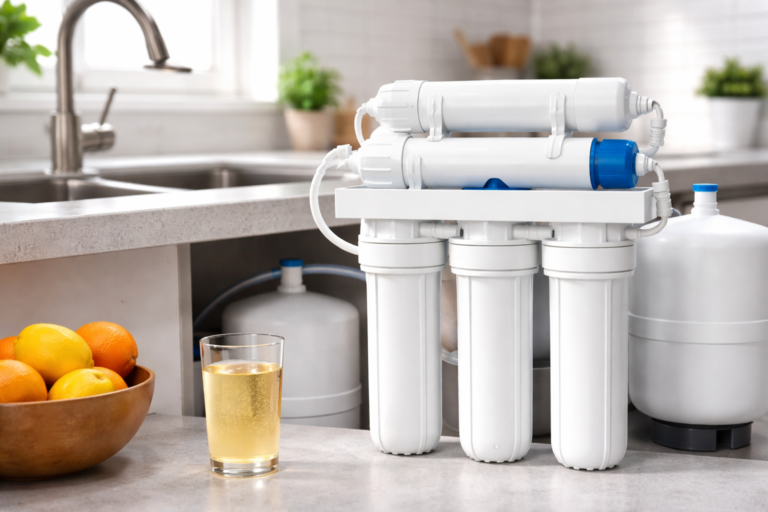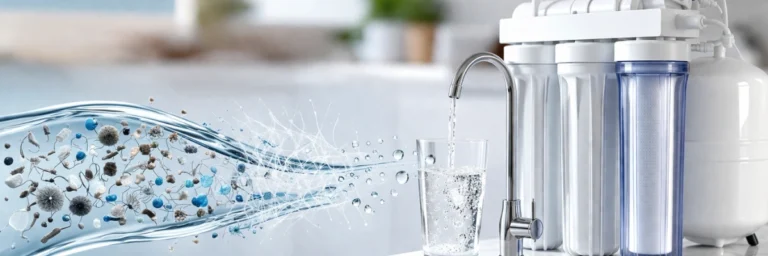
How to Remove Microplastics from Drinking Water?
Recent studies reveal that microplastics — tiny plastic fragments less than 5 mm in size — are now present even in tap and bottled water.
Read guideGuides
Recent studies reveal that microplastics — tiny plastic fragments less than 5 mm in size — are now present even in tap and bottled water.
Read guideHave you noticed reddish-brown stains on your bathroom tiles or a metallic taste in your drinking water?
Read guideWater is no longer just a resource — it’s a critical asset that must be intelligently monitored, purified, and managed.
Read guideAccess to clean, safe drinking water is no longer a luxury—it’s a necessity.
Read guideClean water is vital to health, industry, and sustainability.
Read guideEver noticed your drinking water looking cloudy or murky? That cloudiness isn’t just cosmetic—it could be a red flag for serious health concerns.
Read guideChoosing the right filtration setup is key to ensuring clean, safe water. Many systems use both a pre-filter and a main filter, but what exactly sets them apart…
Read guideSediment—ranging from grit and silt to organic matter—can degrade water quality, damage infrastructure, and reduce treatment efficiency.
Read guideTreating borewell water is essential to ensure its safety and quality, as borewell water often contains various contaminants such as hardness, iron, nitrates, h…
Read guideThe main differences between Reverse Osmosis (RO) water and Demineralized (DM) water relate to their purification processes, the level of purity, and the types…
Read guideIron removal in water treatment offers several significant advantages, particularly for residential, industrial, and municipal water systems.
Read guideDemineralization, also known as deionization, is a water treatment process that removes dissolved mineral salts (ions) from water, providing several advantages:…
Read guideFrom requirement to enquiry
Start with your need, your product or your location. We reply on working days, 10:00 am – 5:30 pm.