Slaughterhouse Effluent Treatment Plant
Untreated slaughterhouse wastewater is rich in blood, fat, and organic matter that can devastate surface and groundwater resources.
- Manufactured in Ambattur, Chennai
- Sized to your site and water
- Installation and service support
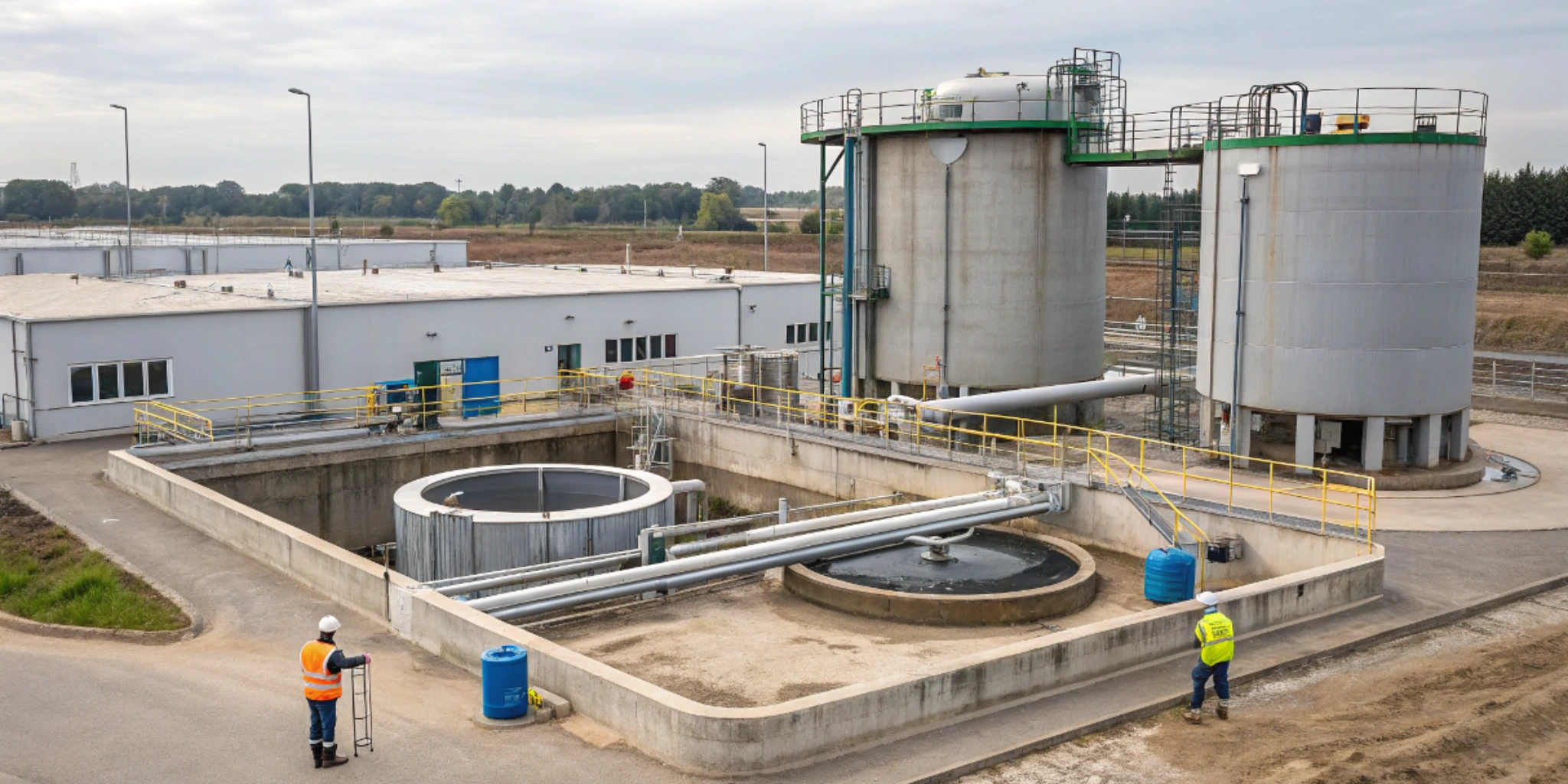
How the System Works
Electro Coagulation (Primary)
Electrodes destabilise colloids and precipitate suspended solids.
Electro Oxidation (Secondary)
Advanced oxidation breaks down residual organics and pathogens.
Clarification & Filtration
Settled sludge is dewatered; treated water passes through sand & carbon filters.
Disinfection & Reuse
UV/ozone ensures 100 % pathogen kill before water is recycled for wash down or landscaping.
Applications
Abattoirs & meat processing facilities
Poultry & seafood processing plants
Integrated livestock farms
Choose with confidence
Choosing the right sewage and effluent treatment
- Measure or estimate daily wastewater flow and peak hours.
- For effluent, get a characterisation (BOD, COD, TSS, oil, pH).
- Decide where treated water will be reused.
- Check space available and whether the plant can be underground or above ground.
- Plan for sludge handling and for who will operate the plant.
How we work
From first message to running system
- 01
Tell us the need
Share your requirement, site details and any water report or photos.
- 02
We review and size
We ask the right questions and size the system for your site.
- 03
Clear quotation
You get a quote with scope, specification and timelines.
- 04
Build, install, support
We manufacture, install, commission and stay available for service.
Related solutions
More in Wastewater & Sewage Treatment
Questions, answered
FAQs about Slaughterhouse Effluent Treatment Plant
Still unsure? Ask us directly or call +91 95000 55565.
Does the plant comply with environmental norms?
Yes. Greenly ETP meets Central Pollution Control Board (CPCB) discharge limits—BOD ≤ 30 mg/L and COD ≤ 250 mg/L—to protect surface and groundwater quality.
Is the treated water reusable?
Absolutely—the system delivers odourless, colourless, 100 % disinfected water safe for non potable reuse, including floor washing, irrigation, and cooling towers.
How often is maintenance required?
Quarterly preventive checks are typically enough because the plant is fully automated and built with durable, non corrosive components.
Can the system be customised?
Yes. We engineer modular units for capacities ranging from 5 KLD to 500 KLD and can tailor processes to specific pollutant loads and site footprints.
How is an STP sized?
An STP is sized on daily sewage flow (KLD), which depends on the number of people and the water use per person, plus a margin for peaks. We confirm the size after reviewing your site details.
What is the difference between an STP and an ETP?
An STP treats domestic sewage from toilets, kitchens and bathrooms. An ETP treats industrial effluent, which varies with the process and often needs chemical treatment before biological treatment.
Can treated water be reused?
Yes. Treated sewage is commonly reused for flushing, gardening and cooling towers. Additional polishing such as filtration and disinfection is added to suit the reuse.
Which technology is best for limited space?
MBBR and MBR plants need less space than conventional extended aeration. The final choice depends on load, budget and the treated water quality you need.
Do you help with operation after installation?
We commission the plant, train operators and offer service support. Operation and maintenance arrangements are confirmed with the quote.
Is STP sludge hazardous?
Domestic sewage sludge is generally non-hazardous. After dewatering it can often be used as manure, subject to local rules.
Start a conversation
Tell us what you need
Share a few details about Slaughterhouse Effluent Treatment Plant and your site. We reply on working days with questions or a quote.
Talk to a person
Speak with the Greenly team
No call centre. Your message reaches the people who design and build the system.
- +91 95000 55565
- WhatsApp +91 95000 55565
- greenly@greenly.co.in
- 101, 102 & 103 Tass Industrial Estate, SIDCO Industrial Estate, Ambattur, Chennai 600058
Visits by appointment - Open 10:00 am – 5:30 pm