1. How does a borewell sediment filter work?
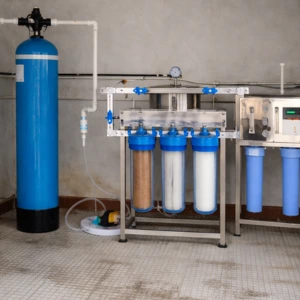
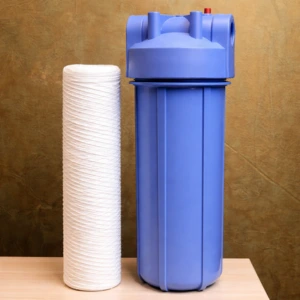
A borewell sediment filter uses mechanical filtration. Water passes through a micron-rated cartridge (5–20 microns) that traps sand, mud, rust, and suspended solids. This helps protect RO membranes, geysers, and plumbing lines from clogging or damage.
2. Can I use this filter before an RO or UV system?
Absolutely. It’s designed as a pre-treatment step. Removing coarse particles first extends the life of your RO membrane, reduces maintenance, and improves purification performance downstream.
3. What is the filter made of?
You can choose between:
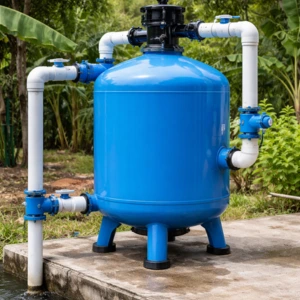
- FRP (Fiberglass Reinforced Plastic) – lightweight, rust-free, and cost-effective
- Stainless Steel (SS304 or SS316) – heavy-duty, durable, and ideal for aggressive water conditions
Both options are suitable for indoor or outdoor installations.
4. How often should I clean or replace the cartridge?
- Clean every 2–4 weeks (depending on sediment load)
- Replace every 6–12 months
In high-sediment zones, monthly replacement may be needed to maintain flow rate and water quality.
5. What micron ratings are available, and which should I choose?
We offer:
- 5 micron – for fine mud, rust, and silt
- 10 micron – for medium sediment
- 20 micron – for coarse sand and particles
6. Is it suitable for homes and industries?
Yes. This 500 LPH sediment filter is ideal for:
- Homes & apartments (1–3 bathrooms)
- Farms & borewell systems
- Restaurants, laundries, and small factories
Its compact frame allows easy retrofit into most pipelines.
7. What is the lifespan of the filter and housing?
- Filter housing: 5–10 years (FRP/SS)
- Filter cartridge: 6–12 months
Proper maintenance and timely cartridge changes ensure long-term performance.
8. Can it treat iron-rich or hard water?
This sediment filter removes particles but not dissolved iron or hardness. For high iron or TDS levels, we recommend adding:
- Iron removal filter
- Water softener
- Or an RO system downstream

Recent Comments