RO Plant Sizing Guide: How to Calculate the Right LPH (with Examples)
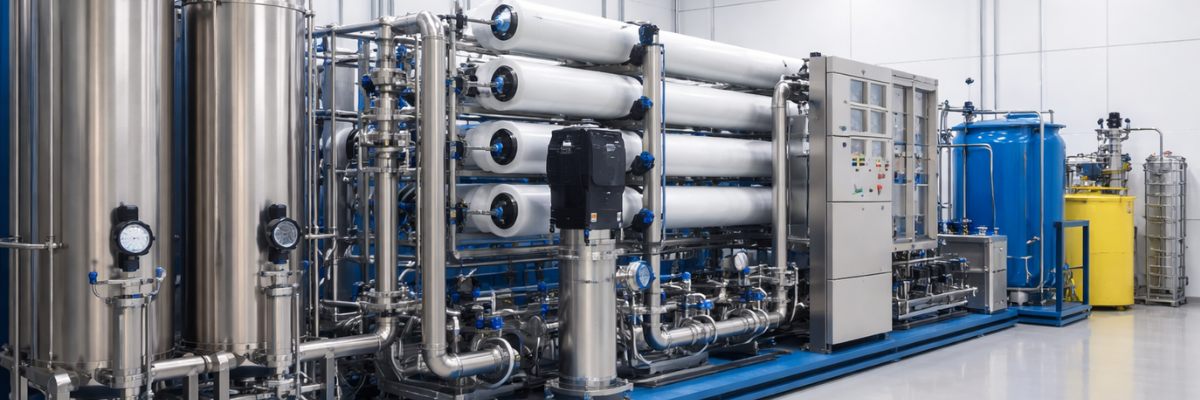
Correctly sizing your RO plant isn’t guesswork—it’s a calculated decision based on your daily water needs, usage pattern, operating hours, and system recovery. Get it right and you'll ensure consistent supply, better membrane life, and reduced operating costs.
In this guide, you’ll learn:
- The exact formulas used in commercial RO sizing.
- Real-world examples for offices, hotels, hospitals, and factories.
- Tips to avoid common sizing mistakes.
Key Terms – Refresher (30 Seconds)
| Term | Definition |
|---|---|
| LPH (Litres Per Hour) | Continuous product water capacity of your RO system. |
| Daily Demand (L/day) | Total purified water required in 24 hours. |
| Operating Hours (h/day) | Actual plant run time (e.g., 8–16 hours). |
| Peak/Diversity Factor (PF) | Accounts for short bursts or overlapping usage (typical 1.2–1.5). |
| Safety Factor (SF) | Buffer for future expansion or membrane aging (1.1–1.25). |
| Recovery (%) | % of feedwater converted to product water. |
| Recovery Factor (RF) | = 1 / Recovery (as a decimal). E.g., 70% → RF = 1 / 0.70 = 1.43 |
The RO Sizing Formula (Step-by-Step)
Step A: Calculate Base LPH (Product Output) Base LPH=(Daily Demand (L/day)Operating Hours (h/day))×PF×SF\text{Base LPH} = \left( \frac{\text{Daily Demand (L/day)}}{\text{Operating Hours (h/day)}} \right) \times \text{PF} \times \text{SF}Base LPH=(Operating Hours (h/day)Daily Demand (L/day))×PF×SF
Step B: Adjust for Recovery Feed LPH=Base LPH×RF\text{Feed LPH} = \text{Base LPH} \times \text{RF}Feed LPH=Base LPH×RF
Pro tip: RO plants are selected based on Product LPH. Feed pumps and pretreatment must match Feed LPH.
Quick Estimation Chart
| Application | Typical Water Use | Notes |
|---|---|---|
| Office (drinking + pantry) | 3–5 L/person/day | Add 10–20% for visitors |
| School/College | 2–3 L/person/day | Canteen water calculated separately |
| Hotel Guests | 3 L/room/day | Add laundry, kitchen separately |
| Hospital Beds | 4 L/bed/day | Add lab, CSSD, OPD loads |
| Manufacturing | 50–200 L/operator/day | Varies by process |
Worked Examples (with Calculations)
A) Office: 120 Staff
- People demand: 120 × 4 L = 480 L/day
- Pantry use: 120 × 1 L = 120 L/day
- Total demand = 600 L/day
- Hours: 10/day, PF = 1.3, SF = 1.15
- Recovery = 70% → RF = 1.43
Base LPH=(60010)×1.3×1.15=90 LPH\text{Base LPH} = \left( \frac{600}{10} \right) \times 1.3 \times 1.15 = 90 \text{ LPH}Base LPH=(10600)×1.3×1.15=90 LPH Feed LPH=90×1.43=129 LPH\text{Feed LPH} = 90 \times 1.43 = 129 \text{ LPH}Feed LPH=90×1.43=129 LPH
Select: 100 LPH RO with 130 LPH feed pump + 150–200 L RO tank.
B) Business Hotel: 80 Rooms @ 65% Occupancy
- Guests: 80 × 0.65 × 3 = 156 L/day
- Kitchen & Ice: 600 L/day
- Laundry: 800 L/day
- Total = 1,556 L/day
Hours = 14/day, PF = 1.35, SF = 1.2, RF = 1.43 Base LPH=(155614)×1.35×1.2=180 LPH\text{Base LPH} = \left( \frac{1556}{14} \right) \times 1.35 \times 1.2 = 180 \text{ LPH}Base LPH=(141556)×1.35×1.2=180 LPH Feed LPH=180×1.43=257 LPH\text{Feed LPH} = 180 \times 1.43 = 257 \text{ LPH}Feed LPH=180×1.43=257 LPH
Select: 200 LPH RO + 300–500 L storage.
Storage Tank Sizing (Don’t Skip!)
Tank Size (L)≈Peak Demand (L/h)×Autonomy (h)\text{Tank Size (L)} ≈ \text{Peak Demand (L/h)} \times \text{Autonomy (h)}Tank Size (L)≈Peak Demand (L/h)×Autonomy (h)
Example: Pantry draws 120 L in 30 mins → 240 L/h.
Recommended storage = 240–400 L for smooth breaks.
Recovery Rate & Pretreatment Selection
| Recovery | Application | Pretreatment Needed |
|---|---|---|
| 35–50% | Domestic | Cartridge, carbon |
| 60–80% | Commercial | Softener, antiscalant, UV, multimedia |
Higher recovery = better OPEX, but needs better feedwater conditioning.
RO Sizing Cheat Sheet
| Use Case | RO Product LPH |
|---|---|
| Small office (<60 staff) | 50–100 LPH |
| Mid office (60–150) | 100–200 LPH |
| Café/Cloud Kitchen | 100–250 LPH |
| 100-bed hospital | 150–300 LPH |
| Light Industry Cell | 200–500 LPH |
Sizing Mistakes to Avoid
- Ignoring kitchen, lab, CIP water
- Not applying peak factor
- Forgetting storage planning
- Designing for product LPH only (not feed!)
- Leaving no buffer for future demand
Mini Checklist Before You Finalize
- Recent water quality test (TDS, hardness, SDI)
- Daily usage by outlet/process
- Operating window & peak time
- PF & SF defined
- Recovery target matched with pretreatment
- Zoned storage near high-demand points
From reading to doing
Explore RO Water Plants
Purified water for homes, buildings and industry. Ask us about your site — we reply on working days.
Keep reading
Related guides

Top Benefits of Installing an RO Water Plant for Your Business & Why RO Treated Water Is Reliable for Industries
Water quality plays a vital role in every business — from manufacturing and food processing to healthcare, hospitality, and commercial operations.
Read guide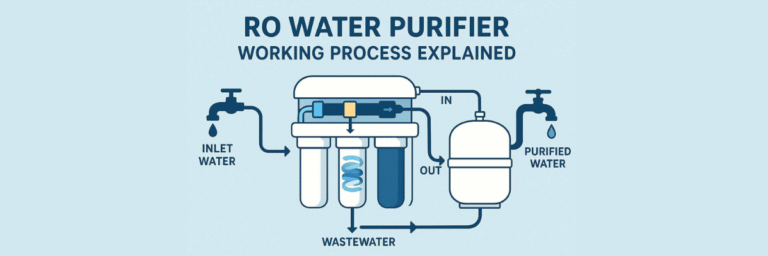
RO Water Plant – a Complete Guide to Reverse Osmosis, Working Process, and Selection Tips
Clean and safe drinking water is essential for every home, office, school, and industrial facility.
Read guide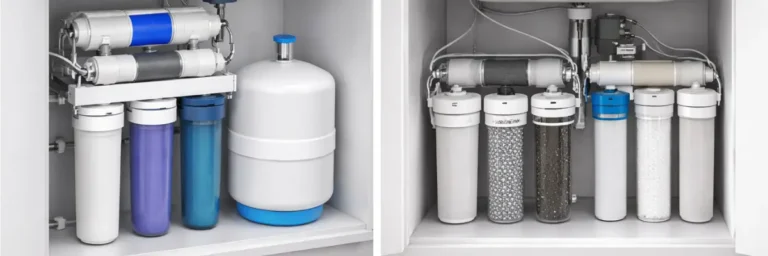
RO vs. Traditional Filtration Systems – Which Water Purifier Is Right for You?
Clean and safe drinking water is no longer a luxury — it’s a necessity.
Read guide