Carbon Filters for Water Purifier
Clean, great-tasting water isn’t a luxury—it’s a necessity. Whether you're using municipal tap water or sourcing it from a well, chemical contaminants, unpleasant odors, and taste issues are increasingly common.
- Manufactured in Ambattur, Chennai
- Sized to your site and water
- Installation and service support
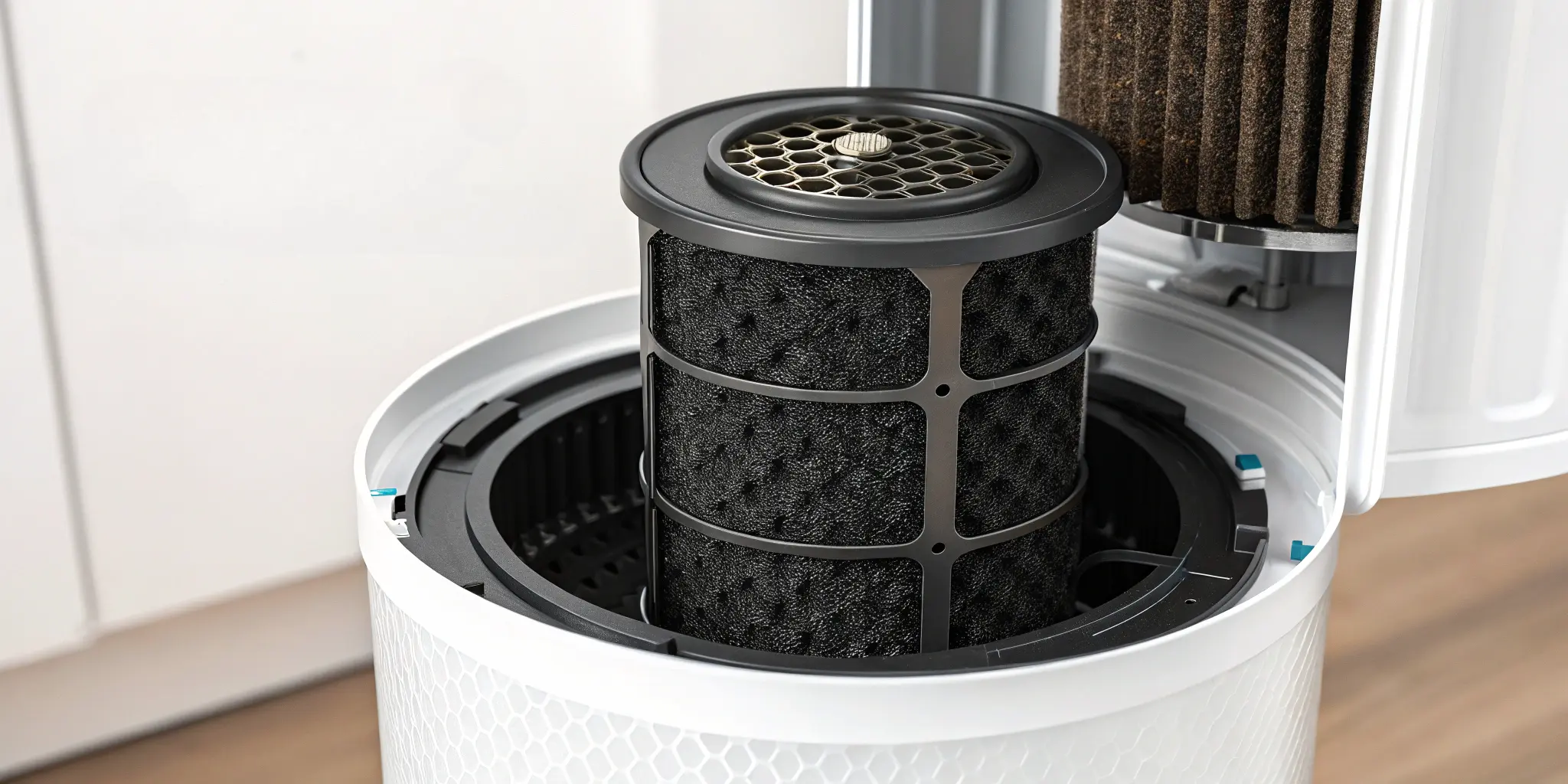
What Is a Carbon Filter in a Water Purifier?
A carbon filter in a water purifier is a crucial component in multi-stage purification systems, typically situated after the sediment filter and before RO or UV stages. Its primary role is chemical removal—effectively trapping chlorine, volatile organic compounds (VOCs), and unpleasant odors to improve taste and safety. This stage ensures better performance and longevity of downstream filters like RO membranes or UV lamps.
How Carbon Filters Work in Water Purifiers: The Science of Cleaner Water
Carbon filters operate on the principle of adsorption, where contaminants adhere to the surface of the highly porous activated carbon material. This structure enables the efficient removal of chlorine, VOCs, pesticides, bad taste, and certain heavy metals like lead. Think of it as a molecular sponge, selectively capturing chemicals that degrade water quality.
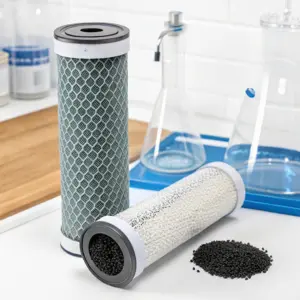
Granular Activated Carbon (GAC)
Loose granules allow faster water flow and are effective in improving taste and odor.
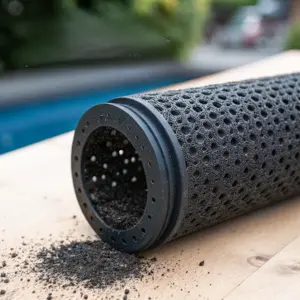
Carbon Block
Densely compressed carbon provides finer filtration, making it more efficient at contaminant removal but with slower flow.
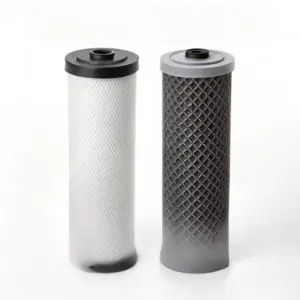
Activated vs Standard Carbon
Activated carbon is processed to maximize surface area, significantly increasing adsorption capacity.
Types of Carbon Filters Used in Water Purifiers
5 Benefits of Using a Carbon Filter in Your Water Purifier
Superior Taste & Odor Removal
Chlorine and organic compounds are neutralized, vastly improving flavor.
Reduction of Harmful Chemicals
VOCs, pesticides, and herbicides are effectively removed.
Protection for RO/UV Filters
Carbon filters trap chlorine, a substance known to degrade RO membranes and UV lamps
Removal of Some Heavy Metals
Filters can capture lead, mercury, and more, depending on design.
Enhanced Clarity & Safety
Cleaner, clearer water promotes better health and peace of mind.
Carbon Filter vs. Sediment Filter: Understanding Their Different Roles
| Feature | Sediment Filter | Carbon Filter |
|---|---|---|
| Main Function | Removes physical debris (dirt, sand) | Removes chemicals, odors, and bad taste |
| Filtration Type | Mechanical | Chemical (adsorption) |
| Placement in System | Usually first stage | Typically second stage |
Choosing the Carbon Filter for Your Drinking Water
1
2
Contaminant Profile
Test your water to determine chemical risks.
Filter Type
GAC offers fast flow; Carbon Block offers deeper filtration.
Micron Rating
A lower rating means finer particle capture.
Model Compatibility
Use manufacturer-recommended filters for good results.
3
4
4
5
Carbon Filter Replacement: When, Why & How Much?
When
Replace every 3–6 months based on usage and water quality. Signs include a return of bad taste or reduced flow.
Why
Old filters can harbor bacteria and compromise filtration.
How
Most are twist-out cartridges—follow your manual closely.
Cost
₹500–₹2000, depending on brand and type. Avoid non-genuine parts.
Why Choose Us?
Expert-Backed Content
Our water purification content is created and reviewed by certified water quality experts and technicians.
Real-World Guidance
We don’t just explain how filters work—we help you choose the right one for your water type, model, and budget.
Transparent Reviews
Our comparisons are unbiased.
Genuine Replacement Support
Need help finding compatible parts? Our Filter Finder Tool and customer support team have your back.
Community-Driven
Thousands of households trust us—and we learn from their feedback to update our guides regularly.
Choose with confidence
Choosing the right filtration systems
- Identify the problem: turbidity, iron, smell, colour or chlorine.
- Match the filter size to flow rate (m³/hour) rather than tank size.
- Plan backwash water and a drain point near the filter.
- Use filtration ahead of RO or softeners to protect them.
- Agree a media replacement schedule at installation.
Shop
Filtration Systems you can order online
Prices and stock shown in the shop. For bulk orders or help choosing, ask us.

How we work
From first message to running system
- 01
Tell us the need
Share your requirement, site details and any water report or photos.
- 02
We review and size
We ask the right questions and size the system for your site.
- 03
Clear quotation
You get a quote with scope, specification and timelines.
- 04
Build, install, support
We manufacture, install, commission and stay available for service.
Related solutions
More in Filtration Systems
Questions, answered
FAQs about Carbon Filters for Water Purifier
Still unsure? Ask us directly or call +91 95000 55565.
What does a carbon filter remove from water?
Carbon filters remove chlorine, VOCs, pesticides, herbicides, and unpleasant tastes or odors. Some also reduce lead, mercury, and other heavy metals depending on the type.
Which carbon filter is best for home use?
For most homes, an activated carbon block filter offers better filtration than GAC.
How often should I replace my carbon filter?
Every 3 to 6 months, depending on water quality and usage. Signs of exhaustion include bad taste, odor, or reduced flow rate.
Are all carbon filters the same?
No. Granular Activated Carbon (GAC) filters offer faster flow, while Carbon Block filters remove finer contaminants. Always check the micron rating and certifications.
Can carbon filters remove fluoride or bacteria?
No, standard carbon filters can’t remove fluoride or microbes. Use RO, UV, or activated alumina filters for those concerns.
Is activated carbon safe for drinking water?
Yes.
Why is the water black after installing a new carbon filter?
This is due to carbon dust (fines). Flush the filter for 5–10 minutes as instructed to clear out initial residue.
Which filter do I need for borewell water?
Most borewell water needs a sand or multi-grade filter for suspended solids, and an iron removal filter if iron is present. A water test tells us which stages are needed.
What does an activated carbon filter remove?
Carbon filters reduce chlorine, odour, colour and many organic compounds. They are often used after a sand filter and before RO or softening.
How often should filter media be replaced?
Sand media lasts longer than carbon. Replacement depends on water quality and backwash practice; we share a schedule when the filter is installed.
Start a conversation
Tell us what you need
Share a few details about Carbon Filters for Water Purifier and your site. We reply on working days with questions or a quote.
Talk to a person
Speak with the Greenly team
No call centre. Your message reaches the people who design and build the system.
- +91 95000 55565
- WhatsApp +91 95000 55565
- greenly@greenly.co.in
- 101, 102 & 103 Tass Industrial Estate, SIDCO Industrial Estate, Ambattur, Chennai 600058
Visits by appointment - Open 10:00 am – 5:30 pm